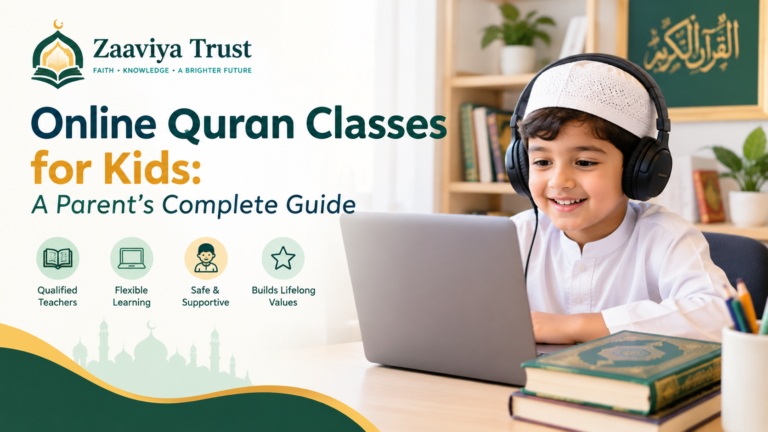
Enrolling your child in Quran classes is an important step toward building a lifelong connection with the Quran. However, many parents notice the same pattern after the first few weeks. The excitement begins to fade, motivation drops, and children start saying things like, “I’m tired,” “I have homework,” or “Can we skip today’s lesson?”
This doesn’t mean your child has lost interest in learning the Quran. More often, it means they need the right routine, encouragement, and learning environment. Today, many families choose online Quran classes for kids because personalized instruction and flexible scheduling help children stay engaged while learning at their own pace.
Here are a few practical strategies that can help your child stay motivated and enjoy Quran learning for years to come.
Online Quran Classes for Kids: How to Keep Children Engaged and Consistent
Choosing the right learning environment is an important part of helping children develop a consistent Quran-learning routine. With Online Quran for Kids, parents can provide personalized instruction, flexible lesson schedules, and one-on-one support that fits their child’s age, learning pace, and daily routine. However, keeping children engaged requires more than simply attending classes—it also involves creating positive habits, celebrating progress, and making Quran learning a meaningful part of family life.
The following strategies can help parents keep their children motivated, consistent, and excited about learning the Quran.
Set Realistic Expectations
Children are naturally enthusiastic when starting something new, but that excitement doesn’t last forever. Like school or any other skill, Quran learning requires consistency, patience, and regular practice.
Before classes begin, have a simple conversation about why learning the Quran is important. Encourage your child to ask questions, share what they hope to achieve, and celebrate the idea that every new Surah or lesson is a meaningful accomplishment.
When children understand the purpose behind their learning, they are far more likely to remain committed.
Choose the Right Teacher
The teacher-student relationship plays one of the biggest roles in long-term success.
A qualified teacher does much more than correct pronunciation. They encourage, motivate, celebrate progress, and create a positive learning environment where children feel comfortable making mistakes.
After the trial lesson, ask your child:
- Did you enjoy today’s class?
- Did you feel comfortable asking questions?
- Was the teacher kind and encouraging?
- Would you like to learn with this teacher again?
A positive connection often matters just as much as experience and qualifications.
Create a Consistent Routine
Children thrive when learning becomes part of their daily routine.
Choose a regular class time when your child is alert and relaxed. For many families, this means avoiding lessons immediately after school when children are mentally tired.
Preparing a quiet learning space, completing Wudu before class, and keeping the Quran and study materials ready all help children transition naturally into “Quran time.”
Over time, these small habits reduce resistance and make learning feel like a normal part of everyday life.
Celebrate Small Achievements
Children stay motivated when they can see their progress.
Whether they memorize a new Surah, improve their Tajweed, or complete a lesson successfully, acknowledge their effort with praise and encouragement.
Positive reinforcement doesn’t need to be expensive or elaborate. Sometimes a heartfelt compliment, sharing their achievement with family members, or allowing them to recite during family gatherings can build tremendous confidence.
Small victories often inspire bigger ones.
Be Patient During Motivation Slumps
Every child experiences periods where motivation decreases.
Instead of forcing lessons or allowing repeated absences, speak with the teacher. An experienced Quran teacher can often identify whether the memorization pace is too demanding, lessons need more variety, or the child simply needs a short reset.
In many cases, small adjustments restore enthusiasm without interrupting long-term progress.
Make Quran Learning Part of Family Life
Children learn most effectively by observing their parents.
When children regularly see family members reading the Quran, listening to recitation, making Dua, or discussing Islamic teachings, they naturally begin viewing Quran learning as part of everyday life rather than another school subject.
Even spending ten minutes revising together after class strengthens both learning and family relationships.
Learn with Quran Mentors
For families looking for personalized Quran education, Quran Mentors has been providing live one-on-one lessons since 2018 with Ijazah-certified teachers. Serving students across 130+ countries, the academy offers structured programs in Quran reading, Tajweed, Hifz, Tafseer, Noorani Qaida, Arabic, and Islamic Studies, with every lesson tailored to each student’s age, pace, and learning style.
Parents can also Learn Quran Online through a free trial class, meet an experienced teacher, assess their child’s current level, and receive a personalized learning plan before enrolling.
Final Thoughts
Helping children stay consistent with Quran learning is not about making lessons more difficult—it’s about making them meaningful.
For Online Quran Classes for Kids with the right teacher, a predictable routine, patient encouragement, and active family involvement, children can develop confidence, enjoy learning, and build a lifelong relationship with the Quran that continues well into adulthood.