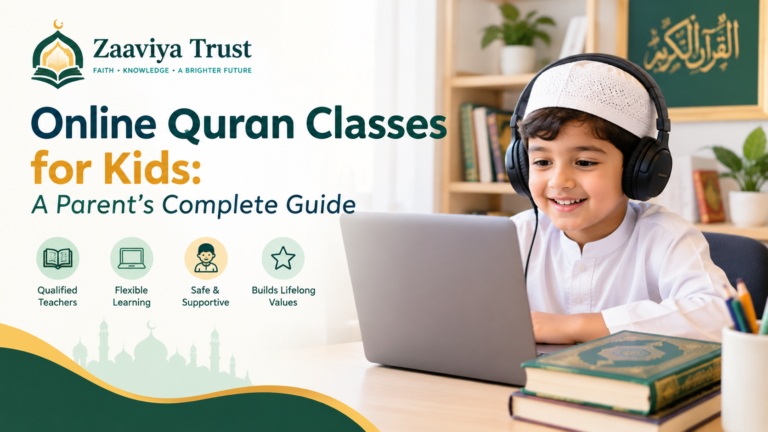
For many Muslims living outside Muslim-majority countries, finding a proper Quran online teacher isn’t as simple as walking to the nearest mosque. There’s no local hafiz nearby, no madrasa that fits around work or school timings, and pre-recorded YouTube lessons only go so far — they can’t correct your makhraj (pronunciation point) or catch a mistake in your Tajweed the moment it happens.
That’s exactly the gap online Quran classes were built to fill. But “online Quran classes” can mean very different things depending on the platform, so it’s worth understanding what to actually look for before you commit your time — or your child’s time — to one.
Why Live, One-to-One Classes Matter
The single biggest difference between a genuinely useful Quran class and a forgettable one is whether it’s live and one-to-one.
Pre-recorded courses are fine for background knowledge, but they can’t listen to you recite. And Quran recitation is a skill you learn by doing, with someone correcting you in real time. A misplaced letter or a skipped rule of Tajweed, if left uncorrected, doesn’t just stay a mistake — it becomes a habit, and habits are far harder to undo once they’re embedded.
A good tutor listens to every single session, corrects errors as they happen, and adjusts the pace of the lesson to how the student is actually progressing, not to a fixed calendar. This applies whether the goal is basic recitation, mastering Tajweed rules, or working toward Hifz (memorizing the entire Quran).
What a Complete Online Quran Curriculum Should Cover
Whether you’re a complete beginner or brushing up on recitation you’ve had for years, a proper program usually moves through three stages:
- Recitation – learning to read Arabic script correctly, letter articulation, and building toward smooth, accurate reading.
- Tajweed – the rules that govern how each letter and word of the Quran should actually be pronounced, from elongation to stopping rules.
- Hifz (Memorization) – for students ready to commit to memorizing the Quran, with a pace built around individual retention rather than a one-size-fits-all schedule.
Platforms that structure their teaching this way tend to get better long-term results than ones offering a single generic “Quran class” for everyone. Quran Mentorship, for instance, runs separate courses for recitation, Tajweed, and memorization, each taught live and one-to-one by a dedicated tutor.
Questions Worth Asking Before You Enroll Anywhere
Before signing up for any platform, it helps to get clear answers on a few things:
- Is every class genuinely live and one-to-one, or are students grouped, or worse, given recorded content?
- Is there a female tutor option, for sisters or young girls who need one?
- Do you get a free trial class before paying anything, so you can judge the teaching quality firsthand?
- Is there a written progress report, so you can actually track improvement month over month rather than just trusting it’s happening?
These aren’t small details. They’re usually the difference between a subscription that gets cancelled after a month and one that actually produces results. Platforms like Quran Mentorship’s online classes are built around exactly these points — live one-to-one sessions, a free demo class, and separate tracks for kids, adults, and ladies.
A Simple Way to Start
If you’re not sure where to begin, don’t overthink it. Start with a free demo or trial class on a platform that offers live, one-to-one teaching. Sit through it. Notice whether the tutor is actually correcting your recitation in real time, or just reading along with you. That one session usually tells you more than any amount of research beforehand.
Learning the Quran properly, whether it’s correct recitation, Tajweed, or Hifz, is a long-term commitment. Getting the foundation right from day one, with a real teacher listening and correcting every mistake, makes that commitment far more likely to stick. For additional Islamic learning and authentic Quranic resources, Zaaviya Trust is also a helpful platform to explore.