Umrah is more than a journey to Makkah. It is a journey of the heart. Millions of Muslims travel each year to walk where the Prophet ﷺ walked, to circle the Kaaba, and to stand in a place where every prayer feels closer to Allah. But the real meaning of Umrah is not found in the miles you travel. It is found in what happens inside you. When you understand the spiritual meaning of Umrah according to the Quran and Sunnah, the whole experience changes. It stops being a trip and becomes a turning point.
Many people start planning their pilgrimage by looking at cost and comfort, and that is normal. Families often search for Affordable All Inclusive Umrah Deals so they can focus on worship instead of worrying about flights, hotels, and transport. That is a smart way to begin. But once the booking is done, the deeper question remains: what is Umrah really about? Why did Allah make this act so beloved? To answer that, we need to look at the words of the Quran and the example of the Prophet ﷺ.
What Is the Spiritual Meaning of Umrah?
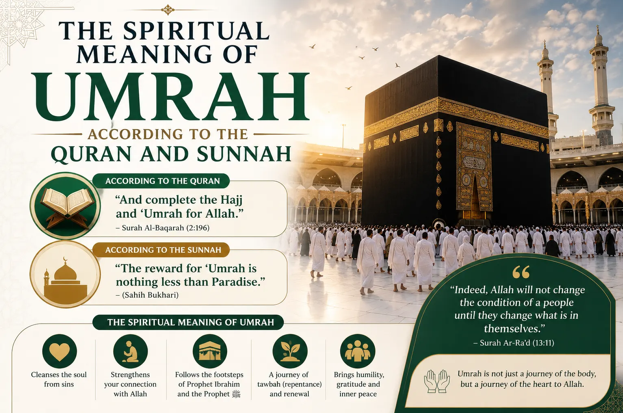
The spiritual meaning of Umrah is to return to Allah with a clean heart, full submission, and renewed faith. It is a small pilgrimage that teaches humility, removes sins, and reminds the believer that this life is short and the journey to Allah is the real destination. Every step of Umrah carries a lesson about devotion, patience, and trust in God.
In simple words, Umrah is a reset. You leave behind your status, your wealth, and your daily worries. You wear two plain pieces of cloth, just like everyone else. In that moment, the rich and the poor look the same. The famous and the unknown stand side by side. This is the heart of Umrah: you come to Allah as you truly are, with nothing but your faith.
Umrah in the Quran
The Quran speaks about pilgrimage with deep care. Allah says, “And complete the Hajj and Umrah for Allah” (Surah Al-Baqarah 2:196). This short command carries a big meaning. It tells us that Umrah is an act done purely for Allah, not for show, not for praise, and not for social media. The goal is His pleasure alone.
The Kaaba itself is described in the Quran as the first house built for the worship of Allah. “Indeed, the first House of worship established for mankind was that at Makkah, blessed and a guidance for all people” (Surah Aal-Imran 3:96). When you make Tawaf around the Kaaba, you are connecting to a place chosen by Allah and built by the Prophet Ibrahim and his son Ismail. You are joining a chain of believers that stretches back thousands of years.
The story of Ibrahim and his family runs through the whole experience. When you walk between Safa and Marwah, you are following the steps of Hajar, the mother who ran in search of water for her child. The Quran honors her struggle by making Safa and Marwah part of the rites of Allah. This teaches a powerful lesson: trust in Allah is not about sitting and waiting. It is about doing your part while believing that He will provide.
Umrah in the Sunnah
The Prophet ﷺ gave Umrah a special place in the life of a believer. He said, “The performance of Umrah is an expiation for the sins committed between it and the previous Umrah” (Sahih al-Bukhari). This hadith shows the mercy of Allah. A single, sincere Umrah can wipe away the mistakes of the past and give you a fresh start.
He ﷺ also said that Umrah during Ramadan equals the reward of Hajj performed with him (Sahih al-Bukhari and Muslim). This shows how much weight a small act of worship can carry when the heart is sincere and the timing is blessed. The Sunnah teaches us that Allah does not measure worship by size alone. He measures it by sincerity.
The Prophet ﷺ performed Umrah himself and taught his companions exactly how to do it. Every step we follow today comes from his example. This is why Umrah is not something we invent or change. We follow the way of the Prophet ﷺ with love and care, knowing that true worship means doing it the way he showed us.
The Inner Lessons of Each Step
Each part of Umrah holds a spiritual lesson. When you understand these lessons, the actions stop feeling like a routine and start feeling like a conversation with Allah.
Ihram is the white cloth you wear before entering the sacred state. It reminds you of the shroud that will one day wrap your body. It tells you that one day you will stand before Allah with nothing but your deeds. This thought softens the heart and pushes away pride.
Tawaf is circling the Kaaba seven times. It places Allah at the center of your life, just as the Kaaba is at the center of your movement. Your whole body turns toward Him, and your heart should turn with it.
Sa’i is walking between Safa and Marwah. It is the lesson of Hajar, the lesson of effort and trust. It tells you to keep striving even when the path looks empty, because Allah’s help often comes after the struggle.
Halq or Taqsir is shaving or cutting the hair at the end. It is a sign of letting go, of leaving your old self behind, and of starting again with a clean record.
Because every step carries weight, many travelers plan their journey around blessed and peaceful times of the year. Some choose the holiday season so the whole family can travel together, and well-organized Easter Umrah Packages make it easier to perform Umrah during the school break without rushing the worship. Whatever time you choose, the goal stays the same: to give Allah your full attention and your full heart.
How Umrah Cleanses the Heart
The deepest gift of Umrah is the cleaning of the heart. Sins build up over time. They make the heart heavy and distant. Umrah offers a way to put that weight down. The Prophet ﷺ promised forgiveness for the sincere pilgrim, and Allah is the Most Merciful.
But forgiveness is not automatic. It comes with sincerity, repentance, and the firm intention to change. Umrah works best when you treat it as a true turning point. Leave your bad habits at the door of the Haram. Make a promise to Allah and to yourself that you will return home as a better person. That promise is the real reward of the journey.
This is also why patience matters so much during Umrah. The crowds, the heat, and the long walks all test you. But these tests are part of the worship. When you stay calm and kind in difficult moments, you grow. The struggle itself becomes a form of prayer.
Keeping the Spirit of Umrah Alive After You Return
The journey does not end when you fly home. In fact, that is when the real test begins. Many people feel close to Allah during Umrah but slowly drift away once daily life takes over. The challenge is to hold on to that feeling.
You can keep the spirit alive in simple ways. Keep your prayers on time. Stay away from the sins you left behind. Read the Quran daily, even if only a few lines. Remember the calm you felt near the Kaaba, and let that memory pull you back whenever you feel weak. Umrah is meant to change you for life, not just for a few days.
Final Thoughts
The spiritual meaning of Umrah according to the Quran and Sunnah is clear. It is a call to return to Allah, to drop your pride, to clean your heart, and to start again. Every step, from Ihram to Tawaf to Sa’i, carries a lesson that the Prophet ﷺ taught us with love. When you go with sincerity, Umrah becomes one of the most powerful moments of your life. May Allah accept the Umrah of every believer and write it as a true new beginning.
Frequently Asked Questions
What is the main spiritual purpose of Umrah?
The main purpose is to seek the pleasure of Allah, gain forgiveness for past sins, and renew your faith with a clean and humble heart.
Is Umrah mentioned in the Quran?
Yes. Allah commands believers to complete Hajj and Umrah for His sake in Surah Al-Baqarah (2:196).
What did the Prophet ﷺ say about Umrah?
He ﷺ taught that Umrah erases the sins committed since the last Umrah, and that Umrah in Ramadan carries the reward of Hajj.
Why is Umrah called a journey of the heart?
Because its true value is inward. It is about humility, repentance, and turning fully toward Allah, not just the physical actions.